The Hard and Soft Skills That Define the Modern Scaleup CFO (Zanda Event Recap)
29 Jun, 20268
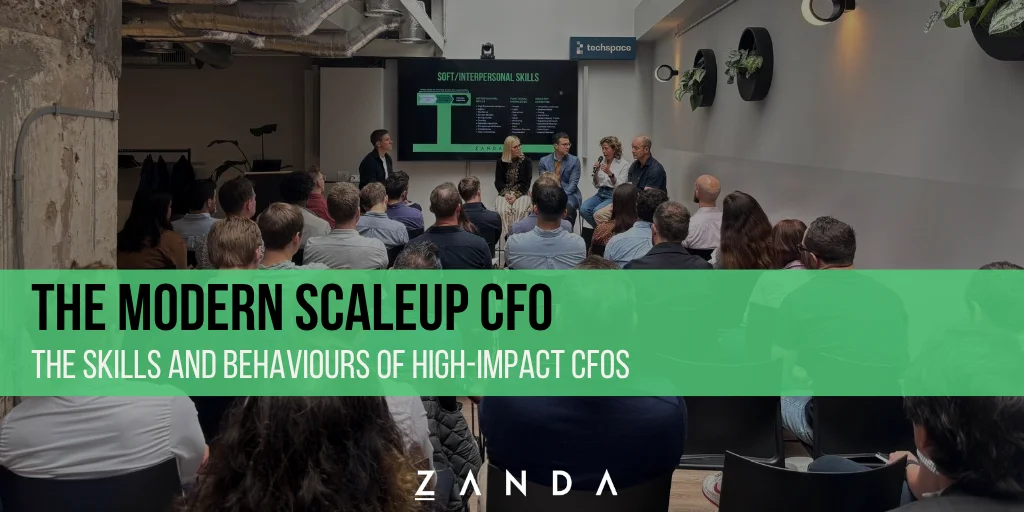
Earlier this month, we brought together a group of impactful CFOs for breakfast in London to talk about one of the most important transitions in a finance career: the step from Head or Director of Finance into a CFO role.
The conversation was honest and direct, and it kept coming back to the same point. Technical capability gets you into the room but what happens after depends on something else entirely.
We were joined by four CFOs with first-hand experience scaling venture and private equity-backed businesses:
- Sophie Corby , CFO at BeZero Carbon
- Daniel Vogel , CFO at Cognism
- Tracy Sambrook , CFO at Amino24i
- Andrew P. , CFO at Evolv AI
Across the session, the panel explored what genuinely separates the finance leaders who make the step up from those who are still working toward it. We have pulled those insights together here, for anyone thinking seriously about what that journey looks like.
What Has Actually Changed About The CFO Role?
The expectations placed on CFOs in venture-backed scaleups have shifted considerably. Financial rigour and reporting accuracy are still essential, but they are no longer the whole role. Today's CFO is expected to be a commercial partner to the CEO, a credible voice in the boardroom, and an active driver of growth strategy and operational performance.
That creates a real gap for many upcoming finance leaders, as hard skills may be the entry ticket, but soft skills are what determine whether you earn a permanent seat at the table and are able to drive value-creation across the business.
The good news, which our panel were consistent about, is that soft skills can be developed. None of the qualities below are fixed traits. All of them can be built with intention, coaching, and time.
Do hard skills still matter?
Absolutely. Boards still expect rigorous financial management, and investors need confidence that the numbers are right and that the person responsible for them understands every line. Exit readiness, IPO preparation, board-level reporting, and financial controls remain areas where technical depth is non-negotiable.
The point is not that hard skills have become less important. It is that they are no longer sufficient on their own. The finance leaders who will stand out are those who have built genuine technical depth and are actively developing the leadership qualities alongside it.
The Six Traits That Set Standout CFOs Apart
Trust and influence
Trust underpins everything else, and it is also the slowest thing to build. It accumulates through consistency, through honesty, through being the person who calls out a bad quarter just as clearly as a good one. The board and the founder need to know that what you are telling them is the full picture.
For aspiring CFOs, this means showing up reliably, following through on commitments, and being willing to deliver difficult messages without softening them to the point of uselessness. It means being the person in the room who tells the CEO what they need to hear, not what they want to hear.
When that trust is established, influence follows naturally. Your perspective starts to carry weight in conversations you are not even part of. The zone of influence a CFO can operate in expands in direct proportion to the credibility they have built over time.
Deep curiosity
The best CFOs are endlessly curious about the business. Not just about the numbers, but about what the numbers mean, where they come from, and what they point to.
Our panel described this as operating on two levels simultaneously: a forensic understanding of unit economics, pricing dynamics, and net revenue retention, alongside a high-level strategic view of where the business is headed and what it needs to get there.
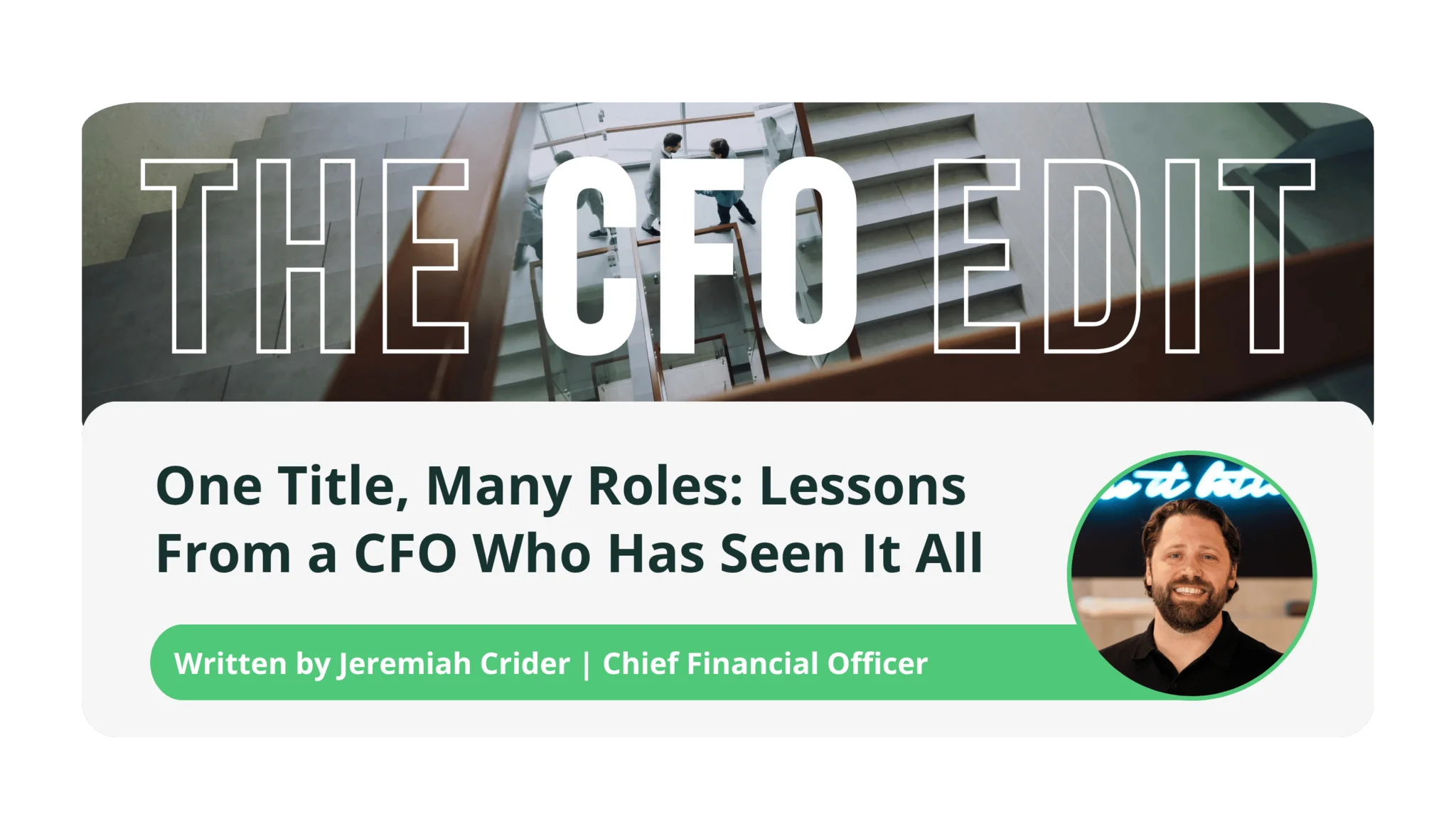
Jeremiah Crider, Group CFO at Carwow, described the best CFOs as moving like a dolphin: able to dive deep into the detail, then surface back up to the strategic view without losing either.
This kind of curiosity keeps a CFO useful beyond the finance function. It is what enables them to spot risks others miss, ask the questions no one else thinks to ask, and contribute meaningfully to decisions that sit well outside their formal remit.
Strategic Sparring partner
A modern CFO does not just report on the business, they help shape how decisions get made across it. That requires the ability to translate complex financial insight into language that resonates with sales leaders, marketing teams, product managers, and engineers. Each audience has different priorities and a different relationship with data.
A CFO who can adapt how they communicate and how they challenge, depending on who is in the room, creates the conditions for healthy sparring. And it is that sparring that ultimately helps drive the right judgment across the business.
Storytelling
Finance professionals are often trained to present the numbers and let them speak for themselves. In a scaleup environment, that is not enough.
The ability to build a compelling narrative around financial performance is one of the most valuable skills a finance leader can develop. Internally, it galvanises teams toward the company's goals and brings people on the journey. Externally, it is what creates genuine excitement with investors and makes them want to be part of what is being built. Good financial storytelling is not about making things sound better than they are but it’s about giving people enough context and clarity that they genuinely understand what the business is working toward and its future potential.
Level 5 Leadership
The concept of Level 5 leadership came up repeatedly in our conversation. For a scaleup CFO, it translates into something specific: a relentless focus on professionalising the business.
The CFOs who stand out are those who are already designing the finance function, the systems, and the reporting standards that a 300-person company will need, when the headcount is still at 150, getting the business PE-ready before a sale is anywhere near the horizon, or raising the standard of communication and reporting so that every stakeholder, from the board to the newest hire, has the information they need to make good decisions.
It is a particular kind of ambition: not personal ambition, but ambition for the business. Hiring and developing the best people, building structures that outlast your own tenure, raising standards before anyone is asking for them. The CFOs who do this well build something genuinely bigger than their own role.
Decisiveness and Pace
In a fast-moving scaleup, the ability to make a call and move is one of the most underrated qualities a CFO can have.
The most effective CFOs do not wait for perfect information, because perfect information never arrives. They gather enough to make a sound judgment, back themselves, and move. That might sound simple, but for many finance leaders who are trained to analyse, validate, and stress-test before concluding, it represents a genuine shift in mindset.
Hesitation in business has a real cost as every delayed decision is a decision made by default, and the business feels it. But decisiveness is only half of it. The best CFOs also set the pace of the business, actively driving things forward rather than reacting to what lands on their desk. What sets standout CFOs apart is not just the ability to make calls under pressure, but the confidence to communicate them clearly and bring people along.
What Should Aspiring CFOs Be Doing Now?
This session reinforced something our panel felt strongly about: the qualities that define a great scaleup CFO are not fixed, and they are not out of reach.
Trust, curiosity, communication, and leadership are all things that can be built with intention and time. These are learnable behaviours, and they are worth investing in.
Start with an honest assessment of where the gaps are. Are you spending enough time understanding the commercial side of the business? Are you building the kind of relationships with the CEO and board that would make you a credible candidate? Are you investing in how you communicate, not just what you communicate?
The most important responsibility a CFO holds is helping the business make more of right judgments calls to drive value creation. Everything else, the skills, the presence, the relationships, is in service of that.
The finance leaders who make the step up successfully are not waiting until they feel ready. They are working on this stuff now, before they need it, because they understand that the best time to build these qualities is long before you are in the seat.