AI Agents in Finance: What’s Working Now and Where to Start
21 Oct, 20268

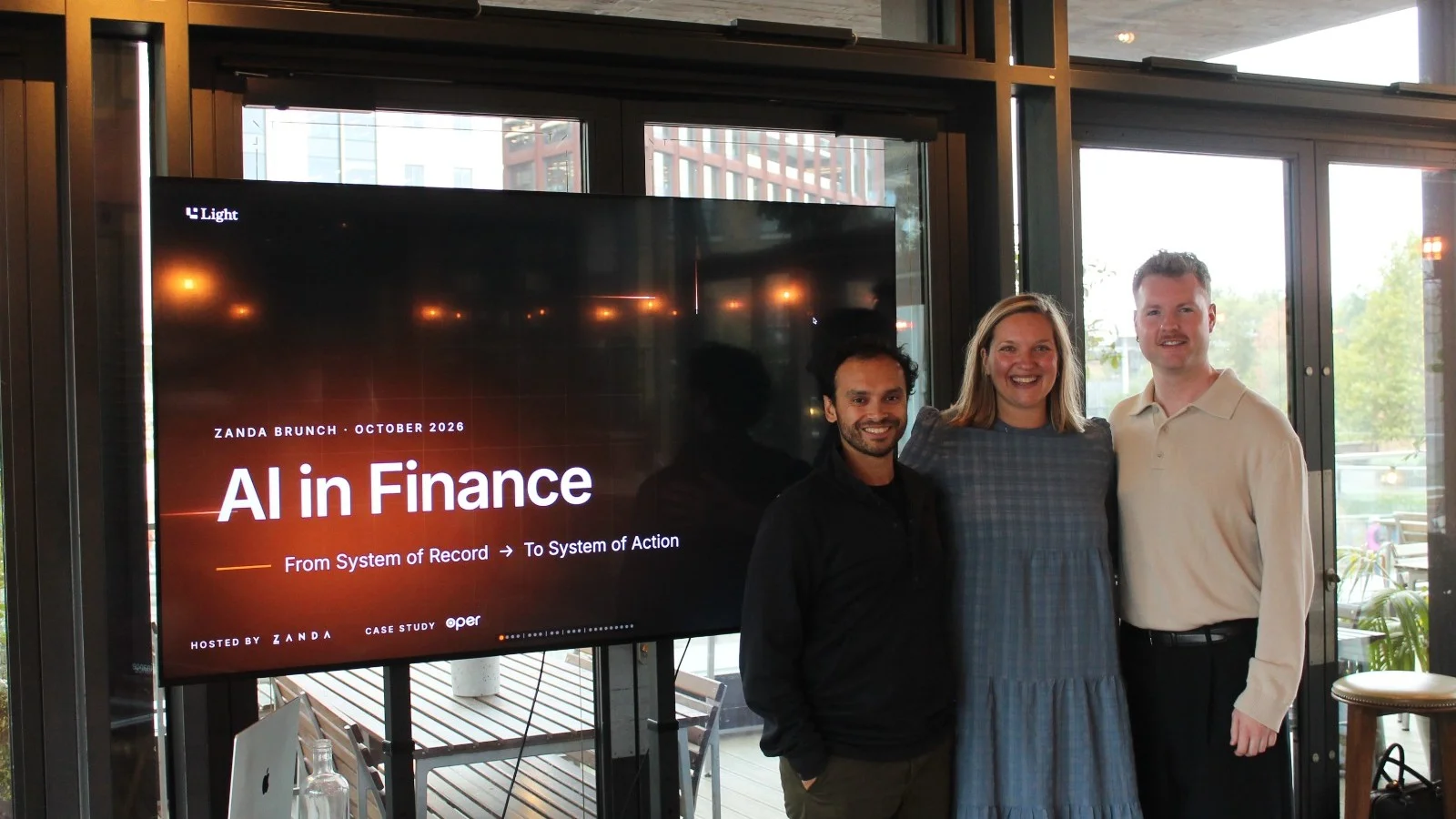
Ask a finance team where the week goes and a big part of the answer is usually the same: moving information from one system to another. An invoice arrives by email, the approval happens in Slack, the figures sit in a spreadsheet and the final entry gets made in the finance platform. Somebody has to keep an eye on each hand-off and make sure the next step happens.
AI agents are starting to take on that work, and it changes what a finance function can do with its time. This blog comes out of a Finance Leader Brunch & Learn we hosted with Light in London, where finance leaders compared notes on what is already working and what it takes to move beyond experimenting with chatbots into using AI in day to day processes.
From System Of Record To System Of Action
Many finance professionals end up acting as a switchboard operator for the business, connecting emails, Slack messages, spreadsheets and finance platforms so that information reaches the right person at the right time. It is necessary work, but it is rarely where a finance leader adds the most value.
AI agents can increasingly take on that coordination. They connect information across systems and pick out what needs attention, so a process can move forward without anyone having to manage every step by hand.
This points to a bigger change in what finance systems are for. Traditionally they have been a system of record, storing transactions and reporting on what has already happened. With agents built in, they can become a system of action that helps teams work out what needs to happen next.
For a finance leader, the practical result is less time spent collecting and reconciling information and more time spent interpreting it and helping the business make better decisions.
What Do AI Agents Actually Do In A Finance Team?
The idea is easier to judge with a real example. Cédric Van Heybeeck from Oper Credits , a Light customer, began by using AI for research and everyday tasks and then moved on to building his own tools. Using platforms including Lovable and Claude, alongside data from Light, he developed a finance cockpit that brings together cash flow forecasts, investor and board reporting, key metrics and compliance reports.
Alongside the cockpit, he has built agents to support recurring finance processes, including:
- A freelancer invoice check that compares invoices against the day rates held in the HR system, then sends a Slack message so the team can approve or reject the invoice.
- Tax code anomaly detection, which flags unusual tax code assignments by comparing them against historical vendor transactions.
- A monthly accruals review that identifies open accruals at the beginning of each month and shares a summary with the team through Slack.
- Accruals proposals, where the agent identifies recurring vendors and suggests accrual rules, with its reasoning set out in an Excel file for the team to review.
- New vendor monitoring, which flags new vendors so the team can check that the right accounting and tax treatment has been applied.
What makes these useful is how well they fit into existing workflows. The agents compare data across systems and flag exceptions with a recommendation attached, and a person stays involved wherever a review or approval is needed.
The way this started is also worth noting. Cédric began with a practical question about which parts of the finance function involved repetitive manual work that could be handled differently. Picking one specific process gave him a way to experiment and build from there, which meant he never needed a large AI implementation plan before getting going.

Where Should Finance Teams Start With AI?
A good place to begin is with the tasks that take up time every week or month, particularly those that involve checking information or moving data between systems, often by following the same steps over and over. These are often the processes where AI makes an immediate difference.
When choosing a process, it helps to look for work that is repetitive and time-consuming, the kind of task that comes round on a regular schedule, such as invoice checks or accruals reviews, and that involves someone manually gathering, comparing or moving information between systems. Work that follows patterns is an especially good fit. Where historical data or a defined set of rules can show what unusual activity looks like or suggest the next step, an agent can do useful work without constant direction.
From there, teams can work out which steps could be automated and where human judgement is still needed.
The state of your data matters just as much as the process you choose. When financial information is spread across several platforms, an AI agent has less context to work with. Bringing financial and operational data together makes it much easier to investigate anomalies and automate workflows.
Can AI Be Trusted With Accounting And Financial Controls?
Accuracy and accountability are essential in finance, so this is usually the first concern people raise. Introducing AI does not mean removing the controls you already have. Approval processes, segregation of duties, audits and variance analysis matter just as much whether a task is carried out by a person or by an agent.
It helps to think of an agent as an additional member of the team. It can do the work and point out where something looks wrong, and it should operate within clear boundaries that set out what it can do independently and what needs human approval. For example, an agent might compare an unusual tax code against historical transactions and flag it for investigation. The finance team then reviews the result and decides whether any action is needed.
Used this way, AI strengthens the finance function’s ability to identify and resolve issues while the right controls stay firmly in place.
How Can AI Help Finance Teams Move Beyond Month-End?
Finance teams tend to focus on making the month-end close faster. A bigger opportunity may be keeping financial information accurate throughout the month, so that problems are found and fixed as they arise instead of at the close.
AI agents can monitor transactions as they happen and flag unusual activity, bringing potential discrepancies to the team’s attention earlier. This reduces the time spent investigating problems after the fact and gives finance a clearer picture of business performance as the month unfolds.
There is a longer term benefit as well. If the reasons behind monthly variances in costs and other financial movements are recorded over time, AI can use that context to build a better understanding of the business. Instead of starting from scratch each month to explain why a number has changed, teams can draw on the history behind earlier movements to spot patterns and make more informed decisions.

What Does AI Adoption Mean For Finance Talent?
As more routine work becomes open to automation, the skills businesses need from their finance teams are shifting. Financial judgement and commercial understanding matter more, as does the ability to use technology well.
As automation takes on more of the manual processing, finance professionals can spend more of their time interpreting results and helping the business decide what to do next. Familiarity with AI is also becoming an increasingly important consideration in finance leadership recruitment, and candidates who can show how they have applied it to real business problems may have an advantage.
Finance professionals also don’t need to have all the answers from the outset. What matters is recognising where AI could help and being willing to try the available tools, with an understanding of how to use them responsibly.
Cédric’s experience at Oper Credits shows what that can look like. He had no detailed AI strategy to begin with and no major implementation project. He started experimenting with ways to improve everyday finance processes and built from there. As expectations of finance leadership continue to change, hands-on experience with AI could become a real differentiator for candidates and for the businesses hiring them.
Let's Continue The Conversation
AI is creating new opportunities for finance teams, but putting it into practice takes more than adopting new tools. It means rethinking established processes and understanding where automation can add value, with the right controls kept in place.
Thank you to Chris Bell at Light and Cédric Van Heybeeck at Oper Credits for sharing their experience at our London event, and to everyone who came along for such an open and insightful discussion.
At Zanda, we are always keen to connect with finance leaders who are navigating these changes and thinking about what they mean for their teams.
Are you exploring how AI could support your finance function, or thinking about the skills your team will need next? Get in touch with our team to continue the conversation.
Related Posts


UK Startup Salary Guide 2026
13 Mar, 2026