US Startup Salary Guide 2026
17 Mar, 2026
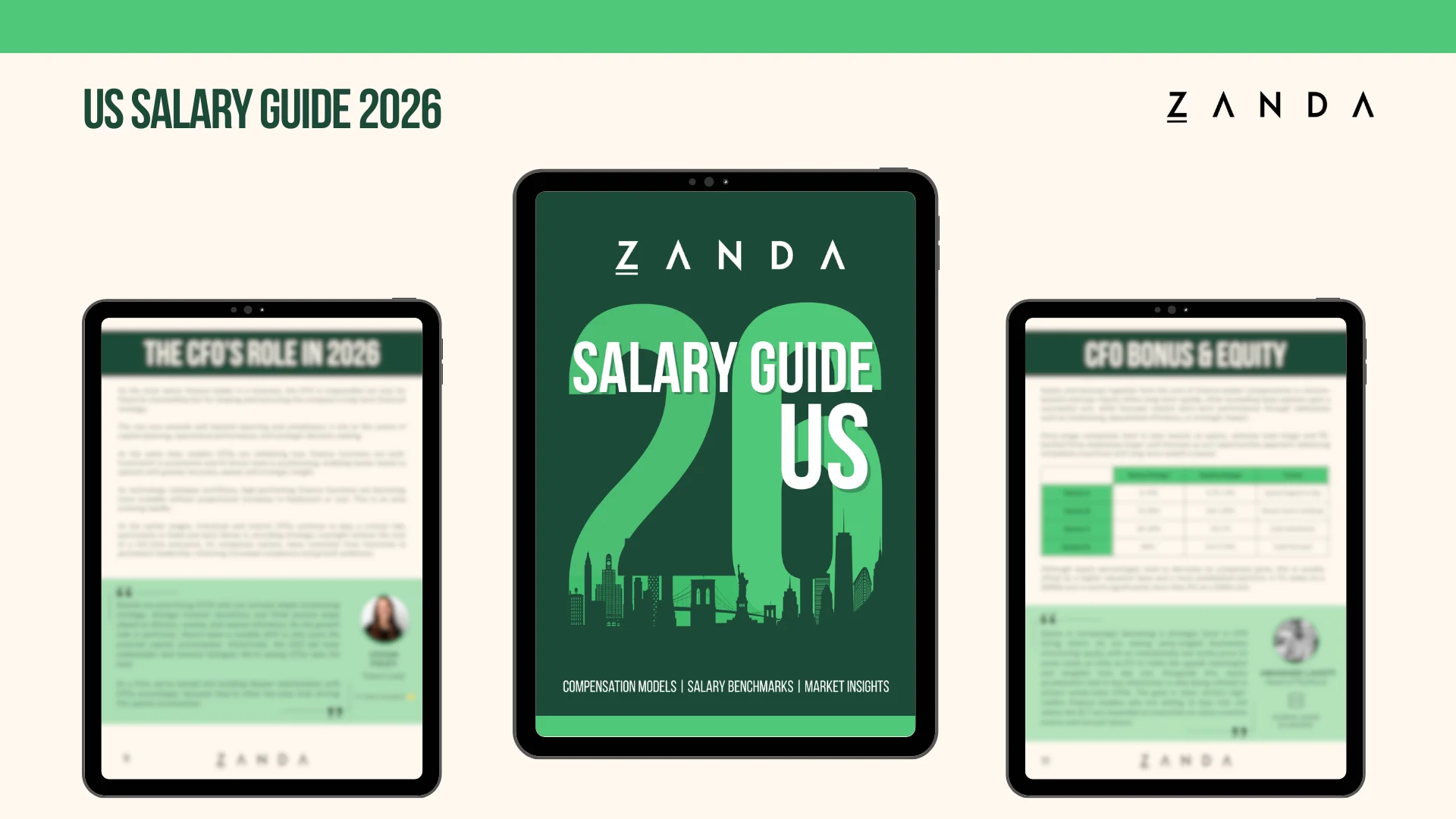


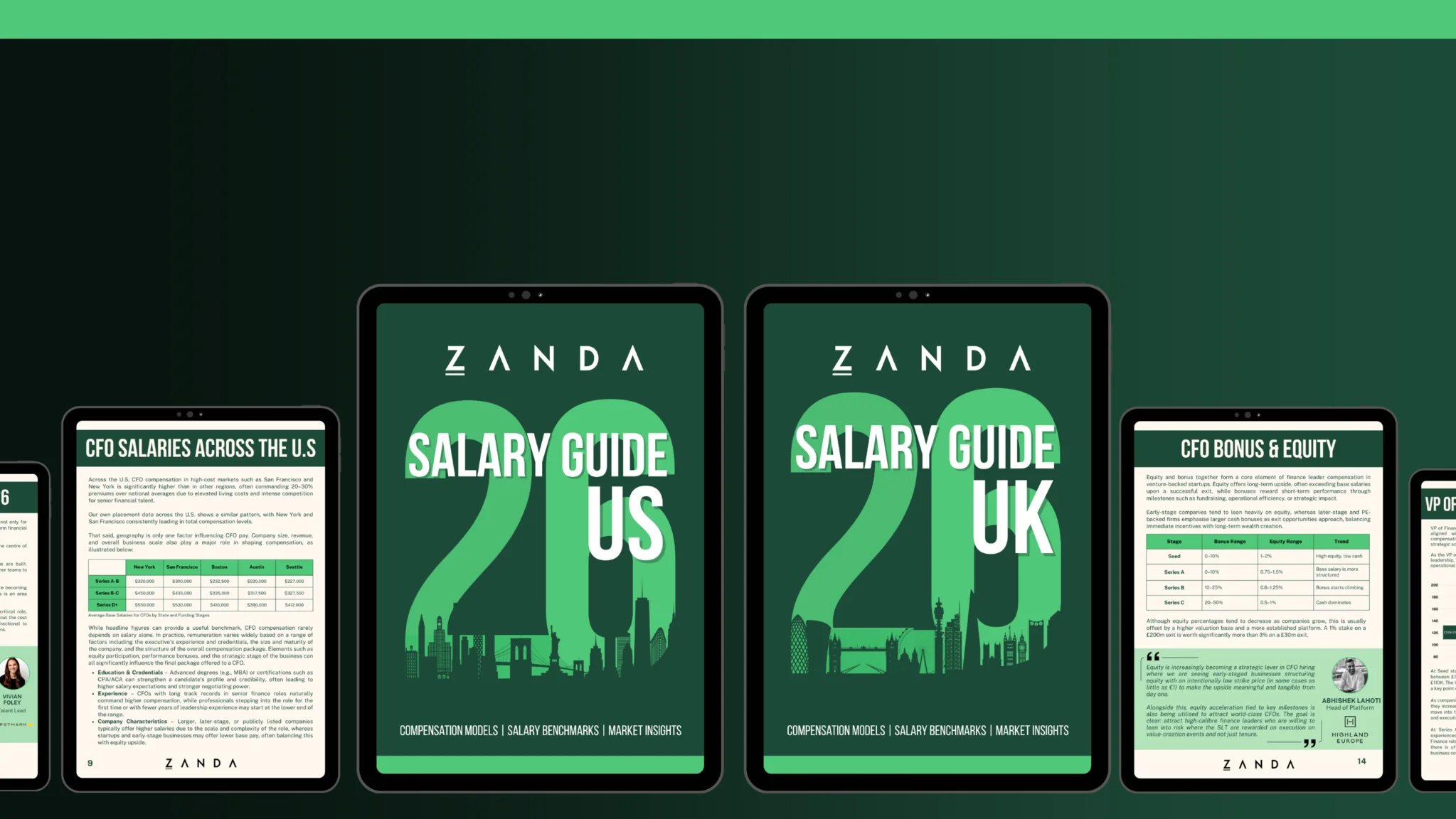
We released our 2026 CFO Salary Guides for the UK and New York back at the start of the year, and we're now well past the halfway mark of 2026. Whether you've had it bookmarked since January or you're coming to it fresh, here's a taster of what you'll find.
After the success of our first Salary Guides in 2024, we knew we wanted to come back and build on it, this time with a sharper focus on how quickly the market had moved in just two years. The result covers base salary, bonus structure and equity by funding stage across the UK and New York, alongside commentary from venture capital firms and finance leaders shaping the market.
Between the AI-driven shift in what a CFO actually does day to day, and a growing gap in how quickly US and UK compensation are moving, there's a lot for our network to get their heads around this year. So if you're negotiating an offer, benchmarking a hire, or just curious where you sit, here's a taste of what you'll find.
Part of the reason we build these guides is to give candidates a clear picture of what the market looks like, and to help companies benchmark their own offers. That includes understanding why finance leaders might be considering a move, so they can make sure what they're offering is enticing to new hires, as well as strong enough to retain the team they already have.
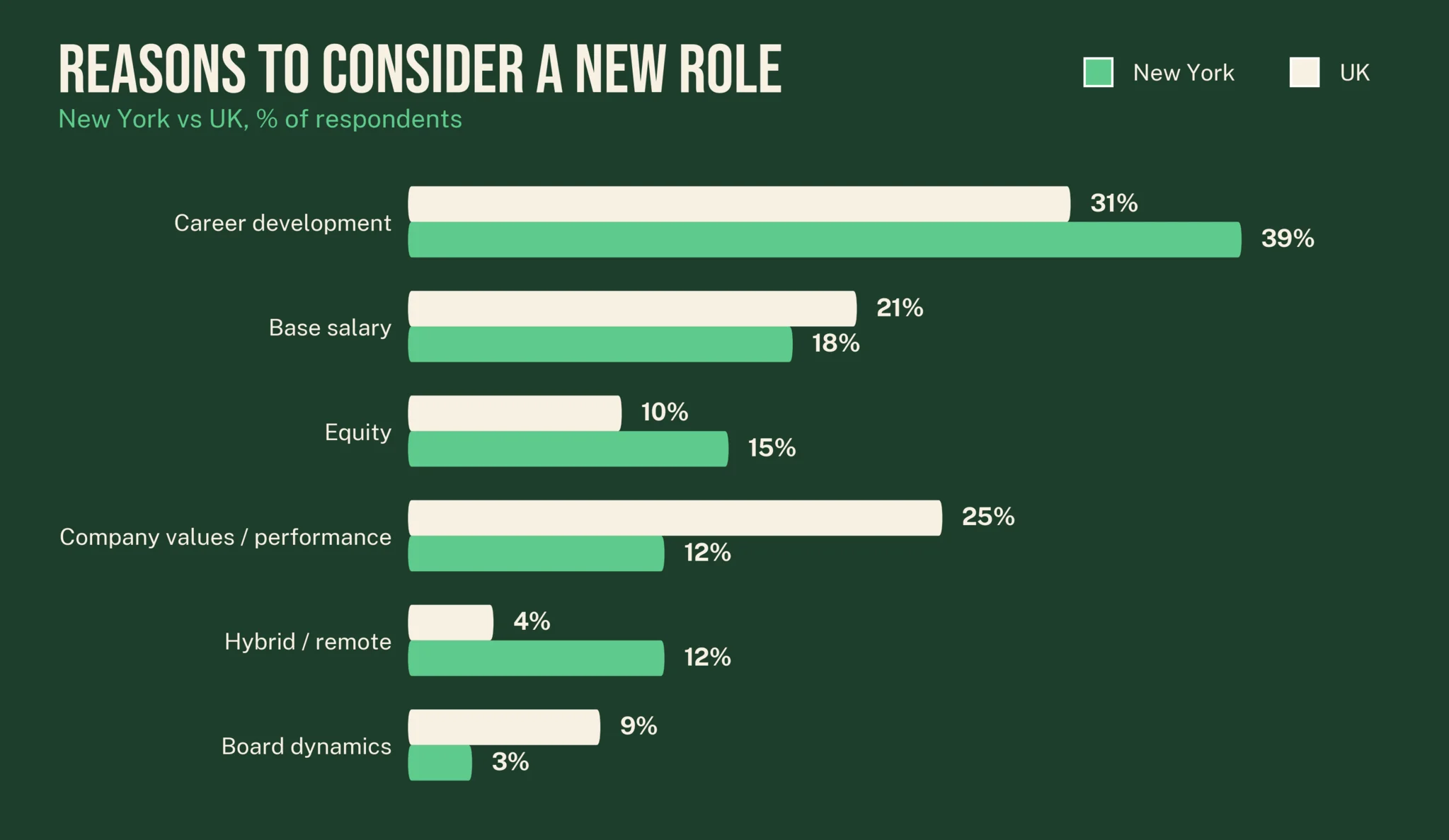
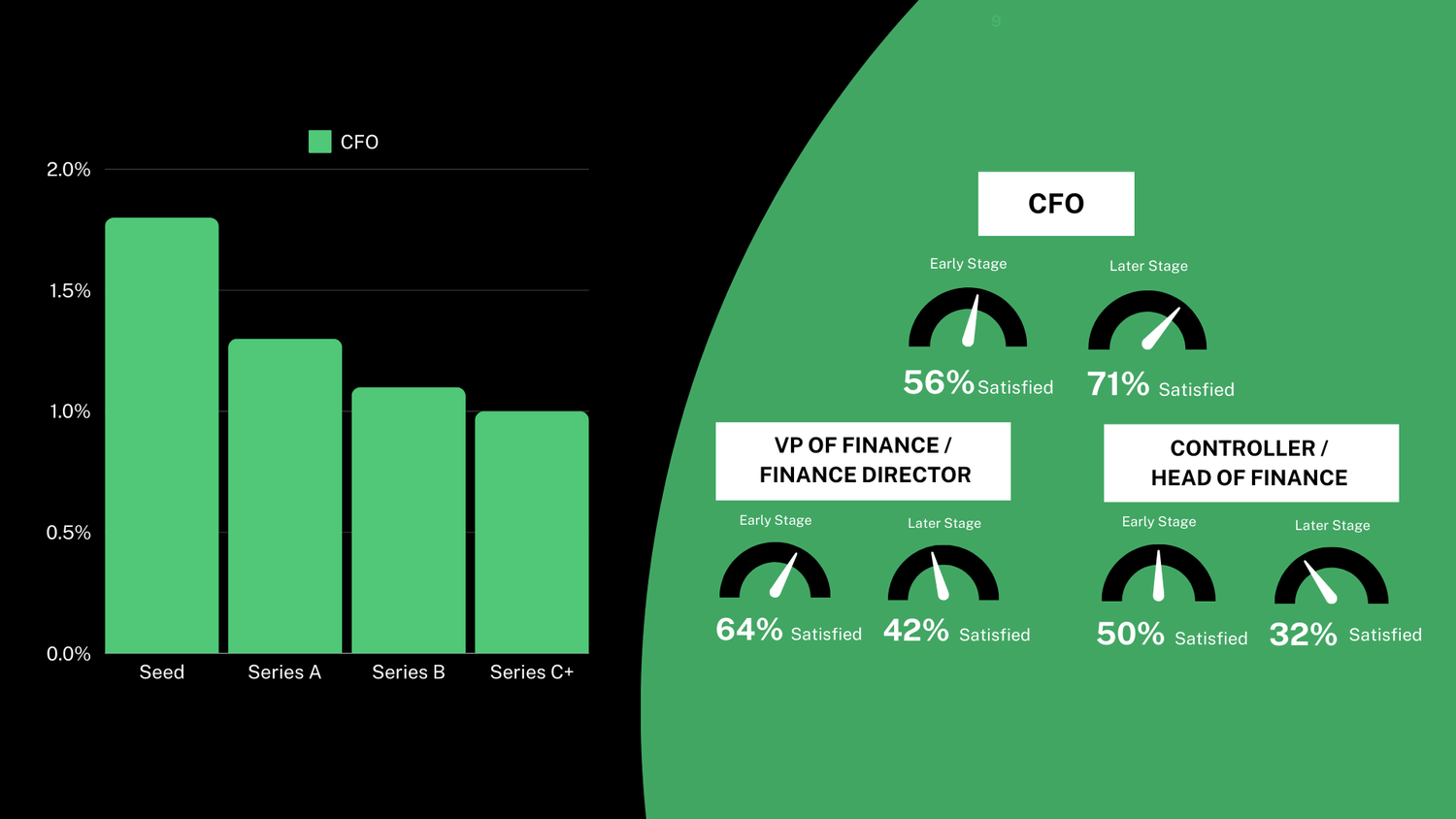
Both guides dig into this, and the comparison between markets is worth a look. CFOs in New York are considerably more open to a move than their UK counterparts, and while career development tops the list of reasons in both markets, pay and equity carry more weight in the US, whereas company values & performance plays a bigger role in the UK. Board dynamics and hybrid/remote setups barely register as reasons to leave in either market, suggesting most CFOs are moving towards something rather than away from a specific gripe.
One of the clearest signals in this year's data is just how much faster CFO pay is accelerating in New York compared to London. Series C alone has seen pay climb by up to 26% since our last guide. In the UK, growth has been steadier, up 10–15% over the past two years. Same role, very different trajectories, and it's worth understanding why before your next hiring or negotiation conversation.
At Series A and B, the gap is there, but it's less dramatic. New York CFOs at this stage typically sit at $250K–$350K, against £150K–£220K in the UK. It's still a meaningful difference, but nowhere near the widening chasm we see further up the funding ladder. Part of that is because early-stage compensation still leans heavily on equity in both markets, so a chunk of the real value gap doesn't show up in the base salary figure at all.
Back in January, AI was already dominating the story, but the numbers have only got bigger since. AI startups now account for roughly 65% of total US VC deal value, and more than half of newly minted unicorns are AI companies. It's reshaping what CFOs are expected to own, from automation budgets to AI-readiness across the wider business. As Luc Hancock, Head of Community at CFO.connect, puts it in the guide: "Today's CFO must architect operating leverage, using AI to streamline workflows, redesign teams, and expand margins without adding headcount."
If you're on the UK side, the fractional and interim market is worth a look. Day rates range from £750–£1,000 for a Seed-stage interim CFO up to £1,500+ for private equity mandates, and we're seeing rising demand for tightly scoped "CFO-1" specialists brought in for specific projects like AI adoption, fundraising prep, or M&A support, rather than broader hires.
Whether it's the salary bands by funding stage, the bonus and equity trends, or how the finance team structure evolves as companies scale, the fundamentals in both guides remain just as useful today as they were on release. There's also more to explore than just the UK and New York headline figures, including how UK pay compares to Europe and the US, and a separate breakdown for PE-backed businesses alongside venture-backed ones. Compensation is a signal, not just a number, and understanding what's driving it is worth ten minutes of your time.
Interested to learn more? Download your copy now.
As always, we'd love to hear how you're using these guides, whether that's shaping your next offer, benchmarking a hire, or just settling a debate with a co-founder. Reach out to our team any time.
 Site by Venn