AI-Native Finance Leaders: When It’s the Right Hire, and When It Isn’t
10 Sept, 20263 minutes

More founders are asking us the same question right now: should their next finance hire be AI-native from day one? It’s the right instinct for some businesses and the wrong priority for others, and the difference comes down to where your real leverage sits.
What does “AI-native” actually mean?
Demand for AI-native finance leaders has grown fast, especially among founders building AI businesses themselves, where the finance function naturally ends up mirroring the product. In practice, that means someone fluent in AI-native ERPs and automation tools from day one, running close to a self-service finance function with minimal manual reporting, rather than someone bolting AI tools onto a traditional setup. Before you commit to that brief, there’s a real trade-off worth being honest about, starting with this: if you’re set on hiring someone with genuine AI-native experience, you’re picking from a very small pool, under 2 percent of the market, because these systems have only had paying customers for 12 to 18 months.
It is better to broaden the pool and focus on attracting and assessing proven finance leaders with a deep, active interest in automation and AI. The right character traits and mindset matter more than whether someone has done this exact thing before. There are finance leaders out there capable of building an AI-first finance function who have not built one previously, but who will do it well once given the mandate.
When AI-native isn’t the priority
That said, AI-native does not need to be the priority for every business at every stage.
Finding a finance leader with a genuine mandate to build an AI-first function takes time, a specific skillset, and sustained focus in that one area. You may well end up with a lean, highly efficient finance function as a result. But that is time and attention diverted away from strategic issues that, in many cases, offer more meaningful leverage to a VC- or PE-backed venture’s growth trajectory.
Consider what your next milestone is. If you are in a competitive, first-mover situation and need to raise money quickly, that leverage looks specific. Maybe it’s closing a round before a competitor gets there first, or making the most of being early to market while the window’s still open. That’s where the real value sits, not in a back-office reporting system. Understanding your unit economics properly, and having a story that stands up in front of investors, tends to matter more at this stage. Pricing and expansion decisions matter too, and they usually take more than one hire to get right.
Is what you already have actually broken?
Your accounting software with the right plug-ins is not broken for many businesses. The real question is whether the cost, distraction, and lean-team trade-off of moving to a fully AI-native setup is worth it compared to the alternative. If a more automated system saves you a meaningful amount each year, but a commercially-minded finance hire spends that same time resetting your pricing or sharpening your unit economics, the second option is very likely the higher-leverage one.
Why most Series B+ businesses need both
Every business is different. We’re meeting plenty of founders who should prioritise an AI-focused finance leader, and just as many who would benefit more from a strategically-minded CFO. Most ambitious Series B+ businesses need both, and in practice that often means a strategic CFO leading the function with an AI-native controller or finance manager underneath them, rather than one person trying to hold both briefs at once.
We’re currently working with one of our clients in the UK, at around £10m ARR, who has just closed a £30m Series A, already earmarked for expansion over the next 12 months, with a Series B north of £100m on the horizon. It’s a complex, high-volume transactional business, and the finance operations and data room need to be built to a standard that can support that scale before a CFO can credibly walk into a room and raise nine figures. So the sequencing looks deliberate: a Head of FinOps with a strong AI focus goes in now, gets the systems, processes, and reporting into shape, and six to nine months later a strategic CFO comes in on top of that foundation to lead the fundraise story and the capital allocation plan. Neither hire on its own would get this business to its next milestone.
Getting that sequencing right means planning around real timelines and real budgets, not just the org chart. A Head of Finance with an AI or automation background, capable of building an AI-native finance function, is normally a three to six month process end to end. A shortlist can usually be identified within a month, interviews and an offer within two, and then you’re looking at one to three months’ notice before they’re actually in the seat. CFO timelines run longer, given the seniority and market of candidates you’re drawing from. In the US, at-will employment norms mean notice periods are typically much shorter, often two weeks, so the same search can move from JD to seat noticeably faster than in the UK.
On cost, UK salaries for that AI-native Head of Finance typically sit between £110k and £140k. CFOs command north of £180k, depending on the stage and complexity of the business.
That’s the version of “needing both” most founders miss: not two people doing the same job, but two different problems solved in sequence. The mistake is assuming AI-native is automatically the higher-value brief, or that a strategic CFO can be brought in too early to matter. Often, the bigger unlock is knowing which problem you’re actually solving for at each stage, and hiring in that order.
Reach out if you want to talk through your options or need guidance, and submit your CV to us if you’re a startup finance leader with a genuine interest in automation and AI. We have roles with your name on them.
Related Posts
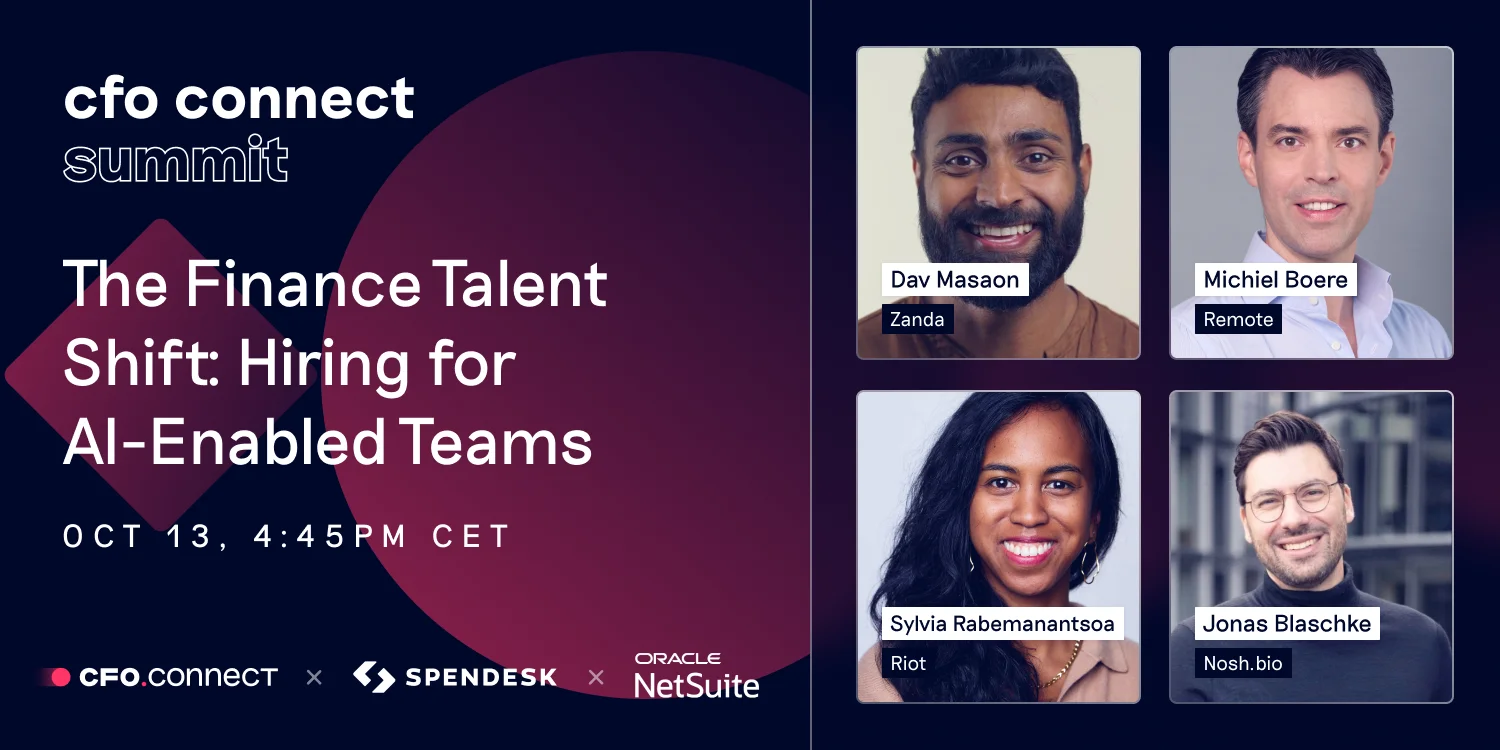
Hiring a CFO: How to Assess Candidates Effectively
23 Sept, 2026

CFO Masterclass | Navigating US Expansion
11 Sept, 2025